

Skin Prick & Intradermal Testing
About skin prick & intradermal allergy testing
Dr Willcocks can identify indications for, perform, and interpret skin prick testing for food and environmental (inhalant) allergens during any initial or follow-up consultation.
What is the role of skin prick testing?
Skin prick testing (SPT) is a non-invasive, safe, and validated method for confirming trigger(s) in patients with a history of IgE-mediated allergies including immediate allergic reactions to foods and allergic rhinoconjunctivitis. This can be helpful for making a diagnosis, guiding personalised management plans including avoidance measures and potential therapeutic targets for patients proceeding with immunotherapy, and to facilitate serial monitoring which may detect potential allergy resolution versus persistence with time.
How is skin prick testing performed?
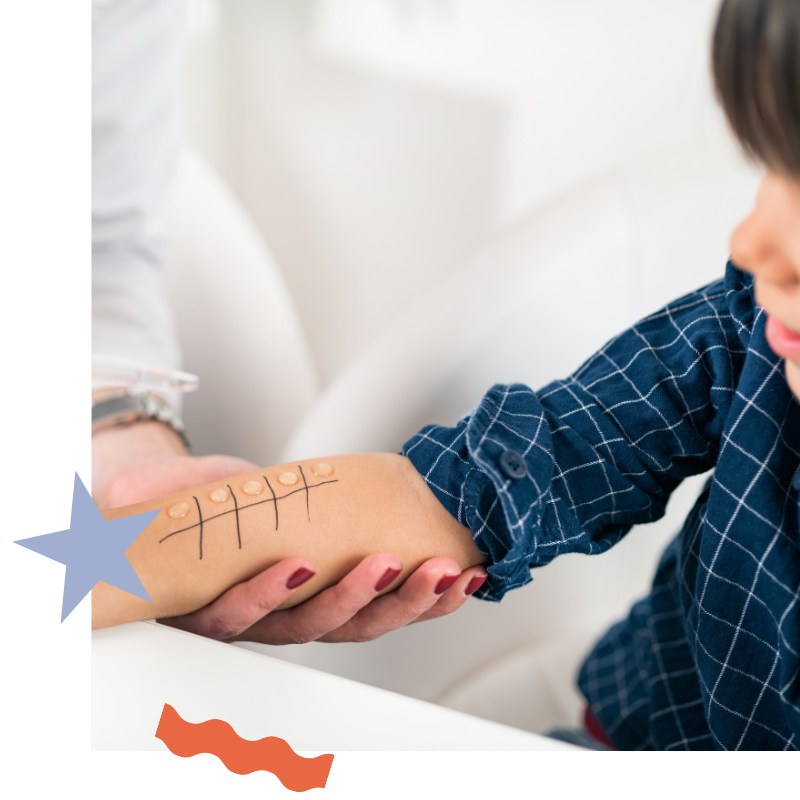
During skin prick testing, Dr Willcocks will apply a small amount of a specific allergen (or allergens) onto the patient’s skin and then prick the surface of the skin gently with a lancet to introduce the allergen into the very top layer of the skin. This can then lead to immune system recognition in patients who are sensitised to the allergen, generating a response that is visible on the surface of the skin as a raised lump (wheal) often surrounded by additional redness (flare).
Occasionally, a different type of skin test, known as intradermal testing or IDT, may need to be performed due to the type of allergen involved (e.g. certain medications or venoms), this test is a little more uncomfortable; so is usually reserved for older patients in situations where diagnosis cannot be made by other means.
Certain medications, particularly antihistamines, need to be avoided in the 3-7 days leading up to any skin prick or intradermal testing. The test is usually performed on the inner aspect of the forearm or the back and results are available 15-20 minutes after the allergens are applied to the skin.
Most patients including young infants tolerate testing very well however some mild, transient discomfort and itch is expected. Occasionally older children and teenagers may feel faint, particularly if they are anxious, in which case testing will usually be conducted with the patient lying down. Serious adverse events following skin prick testing, such as allergic reactions, are possible but very rare, and Dr Willcocks has all necessary emergency equipment and expertise for managing these events in the off chance that they do occur.

Book your Appointment
Dr Sophie Willcocks provides specialist allergy and immunology care for children and adolescents in Brisbane. Appointments are available at Harmony Allergy & Immunology Clinic in Sunnybank.